Could a walk fit after dinner?
Maybe you have ten minutes after dinner, even on days when a longer walk is hard to fit in. If you have type 2 diabetes, the timing of a walk may matter. A small study found that blood sugar rose less after meals when people were asked to walk soon after eating.
Two ways to fit walking into the day
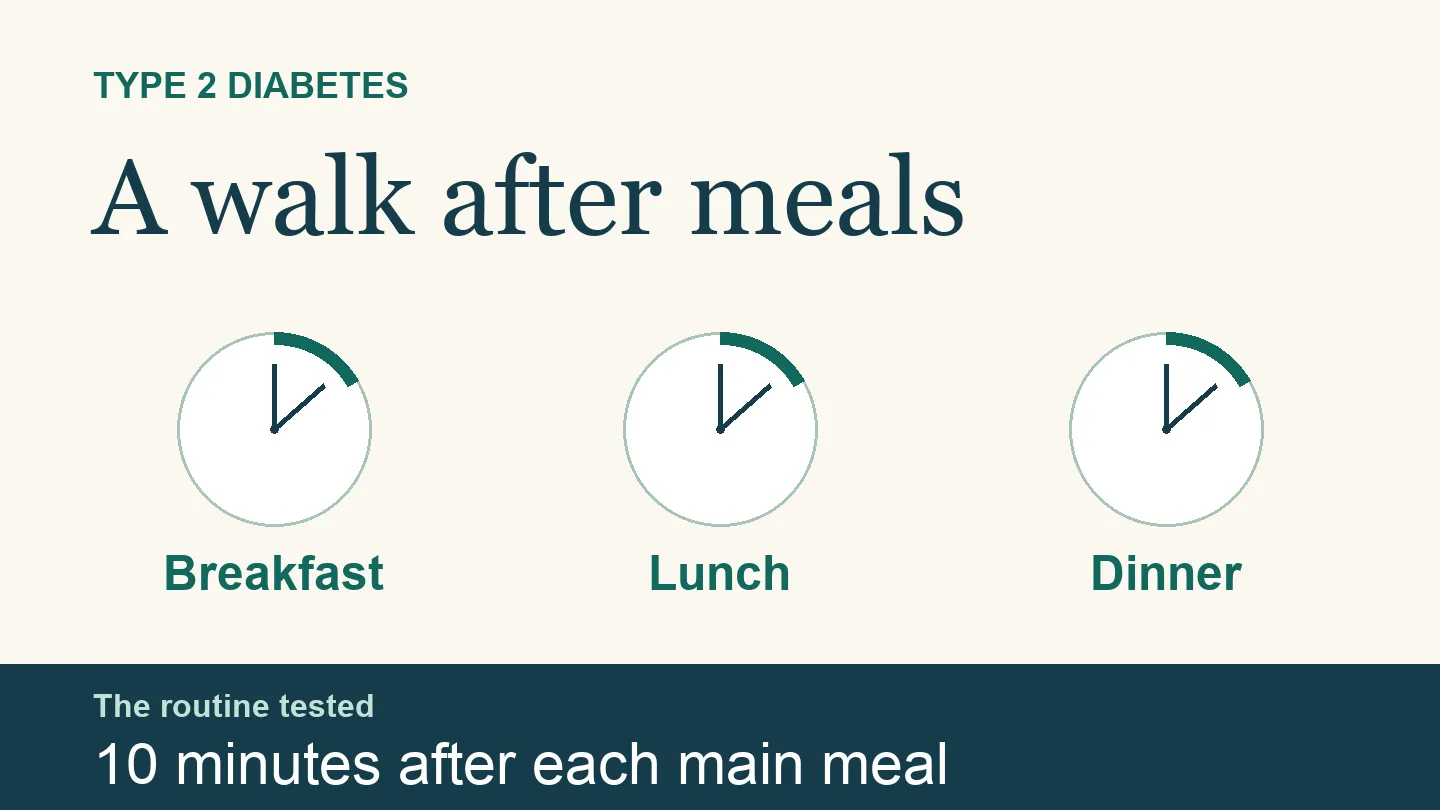
Researchers in New Zealand asked 41 adults with type 2 diabetes to try two routines. For two weeks, each person was asked to take one 30-minute walk a day at a time of their choosing. For another two weeks, they were asked to walk for ten minutes after each of their three main meals. The order was assigned at random, with a break between routines.
Glucose monitors tracked what happened in the three hours after people ate. On average, the rise in blood sugar over those hours was smaller during the after-meal routine. The difference was largest after the evening meal. Read the walking study in Diabetologia.
What can one small study tell us?
Each person tried both routines, so the researchers could compare that person’s responses. But the study was short. It tells us about blood sugar in the hours after meals. It leaves open whether this routine improves A1C over several months or prevents diabetes complications.
A question for your next diabetes visit
Ask, “Would a short walk after dinner fit my diabetes plan, and when should I check my blood sugar?” The CDC suggests starting with a manageable goal and discussing new activity with your clinician. If you take insulin or often have low blood sugar, ask about checking before and after activity and what to do if your reading is low. CDC guidance on getting active and managing blood sugar.
For a DoctorsBeyond primary care follow-up, bring your medication list and any readings you already track. Knowing when you ate or walked can help your clinician put those readings in context.
Sources & further reading
- Reynolds AN, Mann JI, Williams S, Venn BJ. Randomised crossover study of walking after meals in type 2 diabetes. Diabetologia, 2016. DOI 10.1007/s00125-016-4085-2.
- Centers for Disease Control and Prevention. Get Active.
- Centers for Disease Control and Prevention. Manage Blood Sugar.
Explore the sources above for more information. Report a correction or ask a question.