Still coughing in the second week?
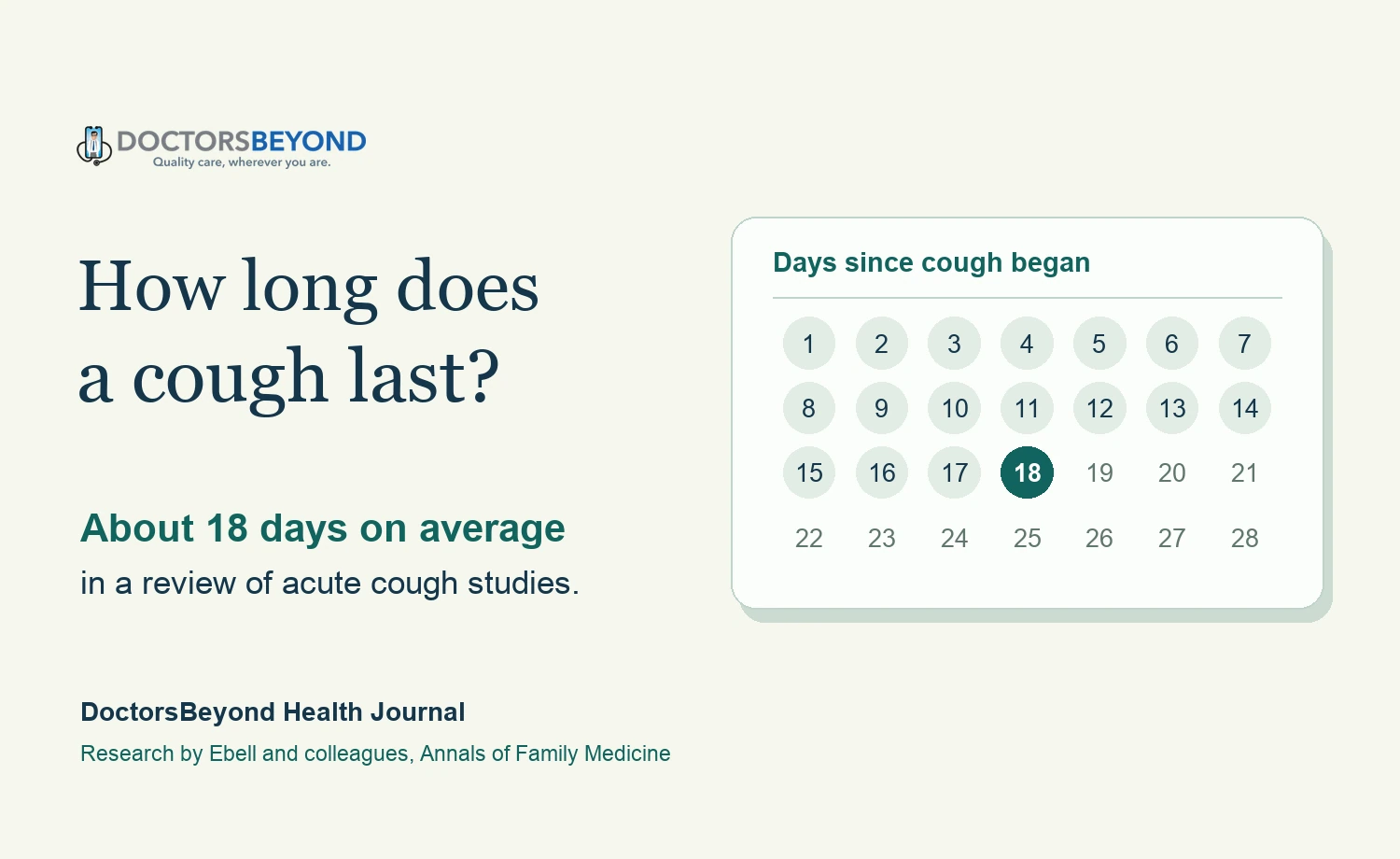
If you expected your cough to disappear in a week, a second week can feel like a setback. In a research review of people with a new cough, the cough lasted about 18 days on average. What matters today is how you feel, how you are breathing and whether your symptoms are changing.
How long people expected to cough
In a Georgia survey, adults were asked how long a cough would last in an illness described to them. Depending on the example, the middle estimate was five to seven days. In the same paper, researchers reviewed studies that followed people with an acute cough and found an average duration of 17.8 days.
The review focused on otherwise healthy people with an uncomplicated illness. The studies measured recovery in different ways. The average cannot tell you what is causing your cough or when it will end. Read the study in Annals of Family Medicine.
What to keep track of
Write down when the cough began and whether it is easing, staying the same or getting worse. If you take your temperature, note the reading and the day. These details can help a clinician decide what to check. For an uncomplicated chest cold, rest and fluids can help you feel more comfortable. Read the CDC’s chest cold guidance.
When to get care
Contact a clinician if you cough up blood, your fever lasts more than five days, or your symptoms last longer than three weeks. Seek advice sooner if you are concerned or getting worse. If you are struggling to breathe or have persistent chest pain or pressure, call 911. See when to seek care for a chest cold. See the CDC’s emergency warning signs.
For a non-emergency cough, you can discuss your symptoms at a DoctorsBeyond online urgent care visit. Have your symptom timeline handy.
Sources & further reading
- Ebell MH, Lundgren J, Youngpairoj S. How Long Does a Cough Last? Annals of Family Medicine, 2013. DOI 10.1370/afm.1430.
- Centers for Disease Control and Prevention. Chest Cold (Acute Bronchitis) Basics.
- Centers for Disease Control and Prevention. About Respiratory Illnesses and Emergency Warning Signs.
Explore the sources above for more information. Report a correction or ask a question.